
Healthcare at Home: Virtual Care Strategy
Summary
Overview
The Outpatient Care Center (OCC) leadership at the University of Illinois Chicago (UIC) was interested in understanding how to carry out virtual care in ways that complemented in-person outpatient care. The Institute of Healthcare Delivery Design (IHDD) team reviewed four clinics' virtual care services.
Objective
Understand perspectives and attitudes towards telehealth to optimize practices and assess long-term viability.
Methods
Trend scan + Interviews + Surveys + Intercepts
Insights
UI Health clinics are still thinking of telehealth from a pandemic response mindset. Still, patients and providers are already thinking about how telehealth will play a role in the future of healthcare and expect it to be an option at UIH.
Recommendations
Design a unified and efficient approach to telehealth that serves the needs of UI Health patients and staff.
Optimize operations and workflows for all clinics. Provide staff and providers with training and development to assure efficiency and excellence in conducting telehealth visits.
Create a support system to ensure all patients can access the high-quality telehealth care that UI Health is now providing.
Impact
An ongoing project that’s in consideration by the C-suite to work in a second phase of the project with IHDD. In this project, the team plans to design the experience of a Telehealth Center of Excellence.
Background
Recognizing that the pandemic and post-pandemic state will impact the UI Health OCC services pushed to examine the desirability, viability, and feasibility of new virtual care that may complement in-person outpatient care.
At IHDD, we analyzed the state of the virtual care experience at four different clinics: family medicine, psychiatry, urology, and endocrinology, and developed the next steps for expanding the current services.
Role: Lead Design Researcher & Graduate Intern
Tasks: Interviewed clinical staff and patients, created journey maps, developed insights, and synthesized key takeaways.
Collaborators: Jennifer Peterson, Project Manager; Grace Hanford, Head of Research; Cameron Beversluis, Design Strategist; Monica Villazon, Graduate Design Research Intern; Xavier Pacheco, Design Research Undergrad Intern.
Objective
Assess the recent experiences, attitudes, and behaviors towards telehealth
and examine perceived barriers and facilitators of virtual care.
Approach
Focused on four clinics: family medicine, psychiatry, urology, and endocrinology.
Trend scan: researched current trends in the healthcare industry and analogous industries.
Benchmarking: investigated current telehealth services in and out of state.
Survey data: reviewed quantitate and qualitative data from Press Ganey Survey.
Clinic staff Interviews: conducted in-person and remote in-depth interviews with clinic leadership and clinic staff. We were able to interview
30 clinical staff.
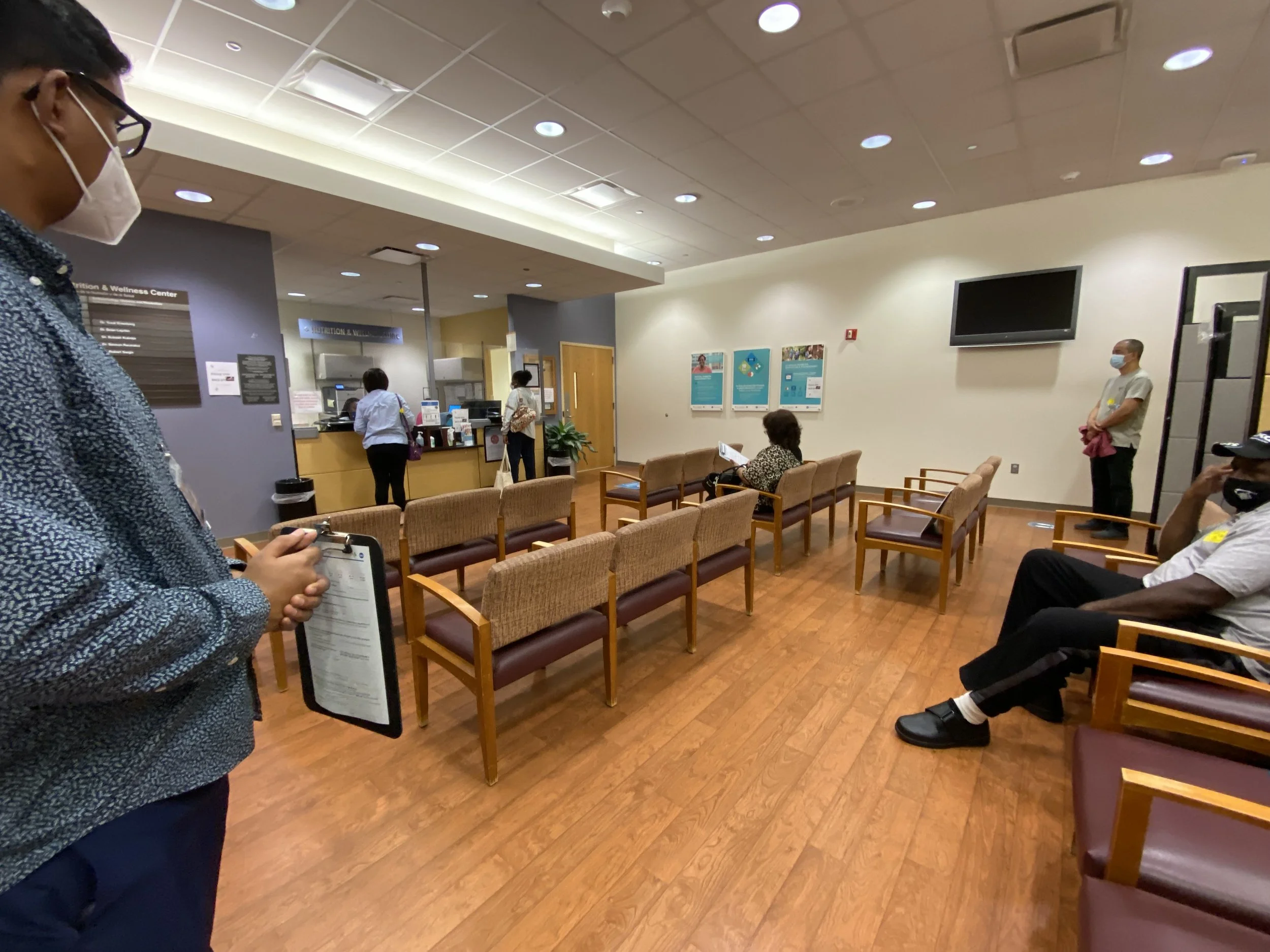
Patient Intercepts: asked patients to answer a print-out survey and interviewed if possible. We intercepted around 25 patients and were able to interview 12, a few of them Spanish speakers.
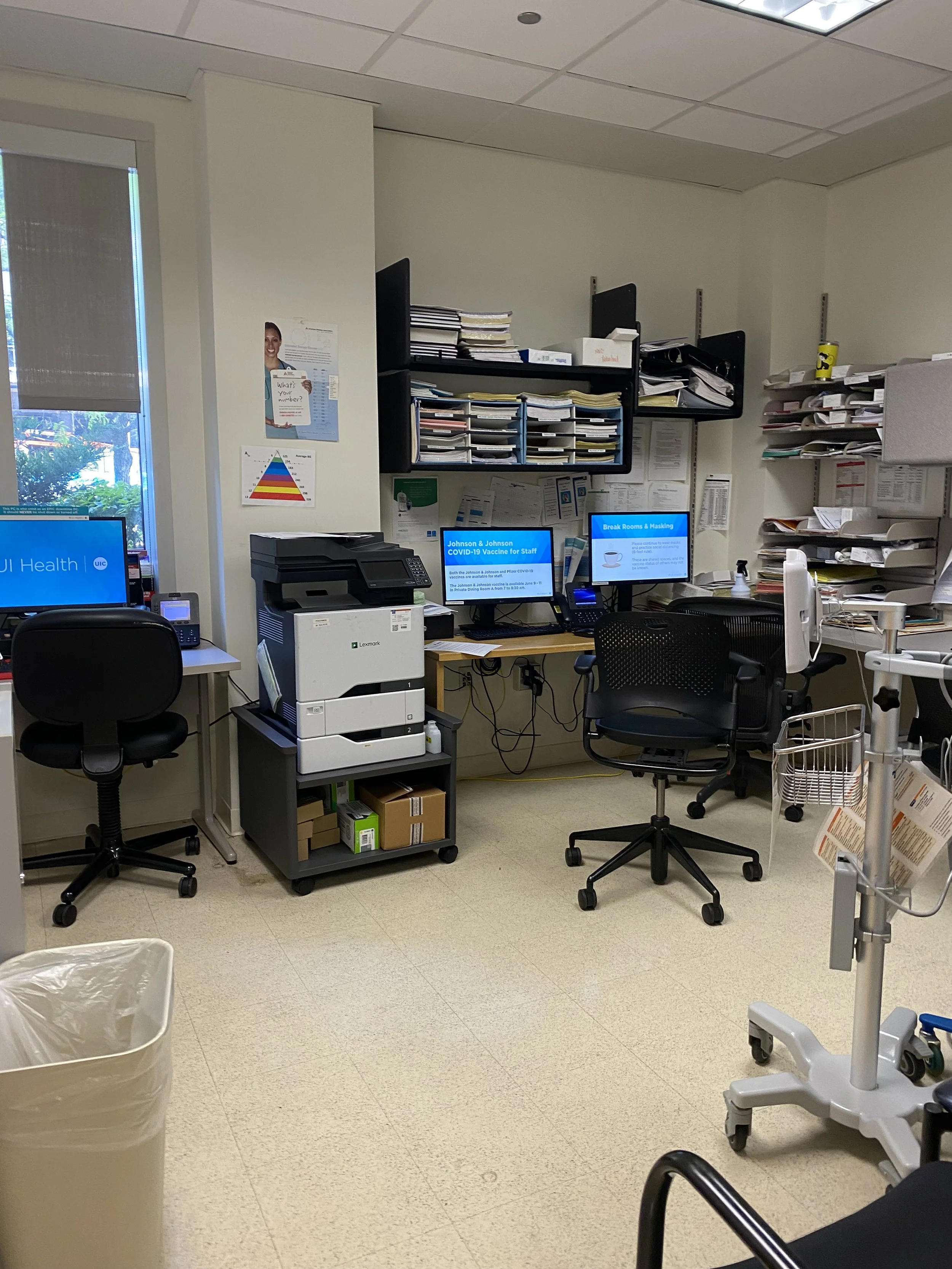
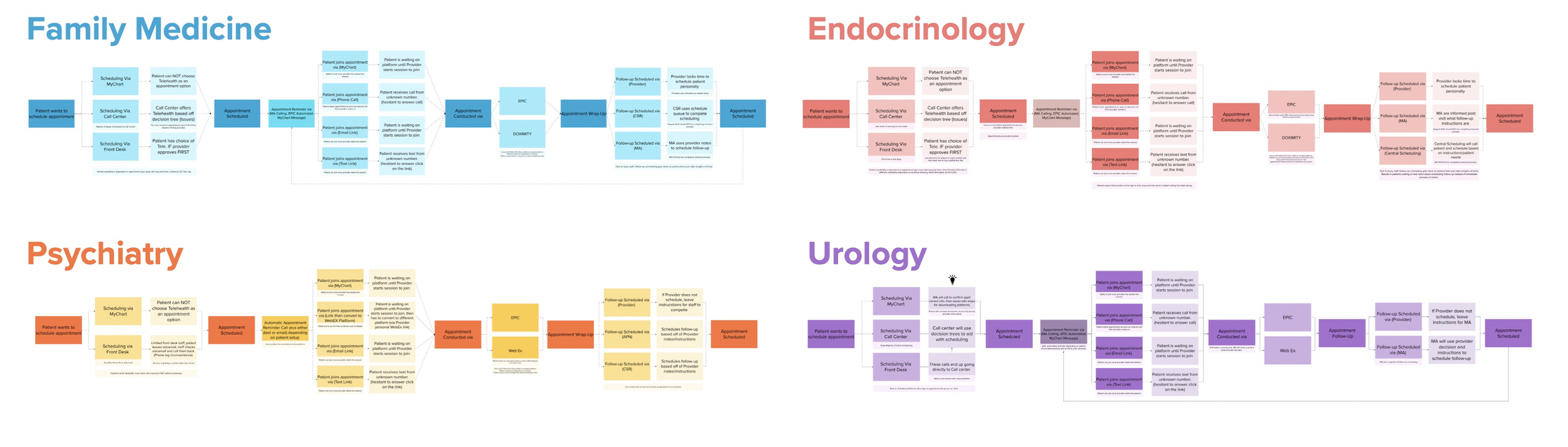
Observations: observed medical staff’s interaction with healthcare software and patients’ in-person journey at the different clinics. We reviewed the features available in the platform to understand the back-end journey.
Insights
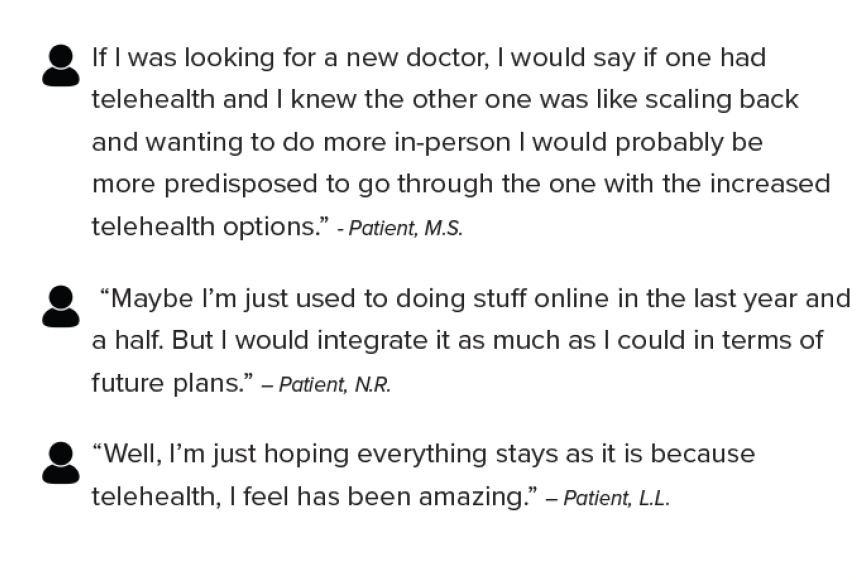
Patients and providers place high value on telehealth
Some patients in the future will choose providers and healthcare systems based on the availability of telehealth visits.
UI Health is still in a reactive mode and the existing processes need to match the shared understanding of when to provide patients with the choice of an in-person or telehealth visit.
Increased work for Front-Desk & Medical Assistants
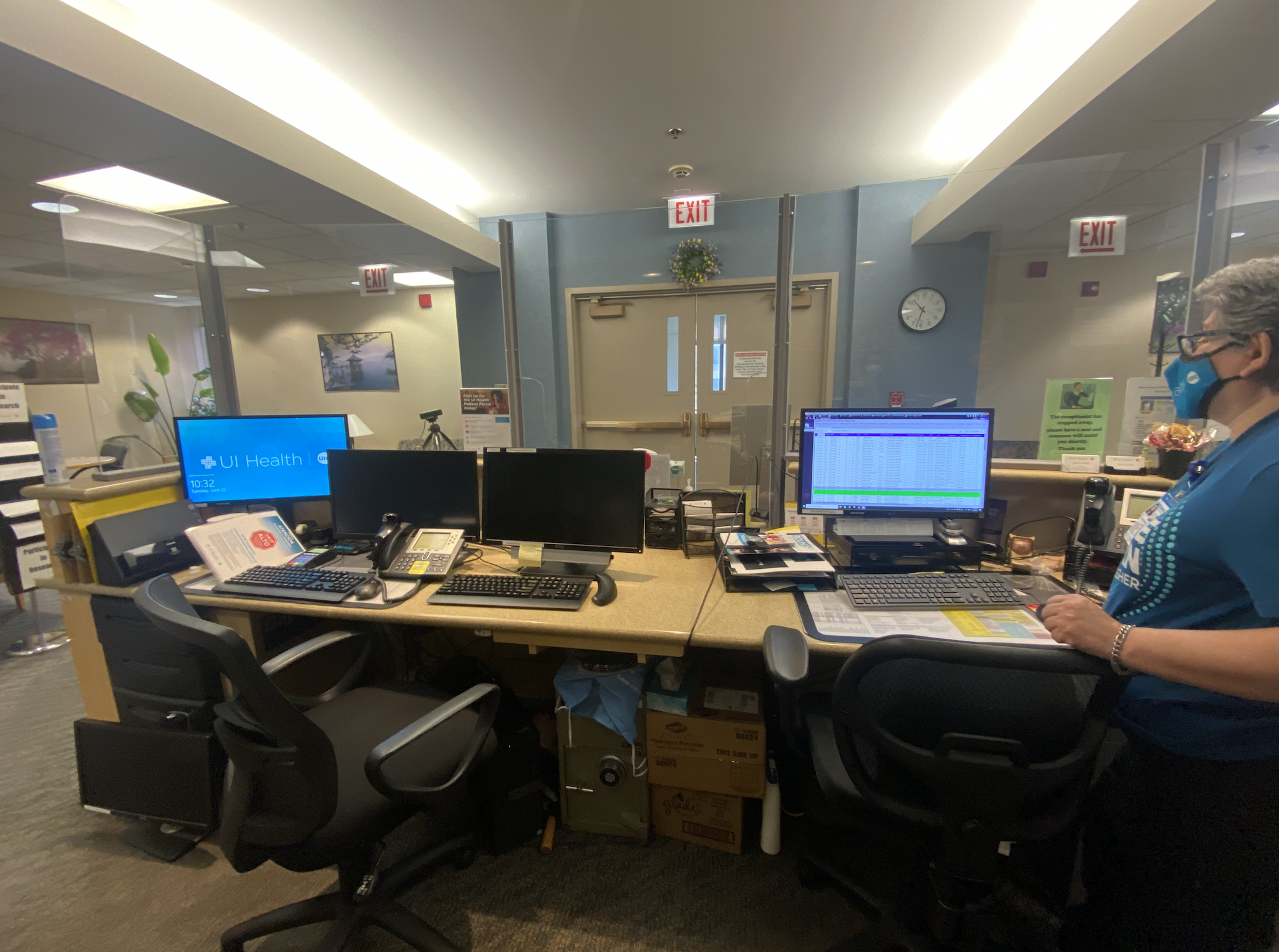
There has been an increase in the amount of time medical assistants spend reviewing information on EPIC. They have to do both in-person and online check-in now and be sure that everything runs smoothly.
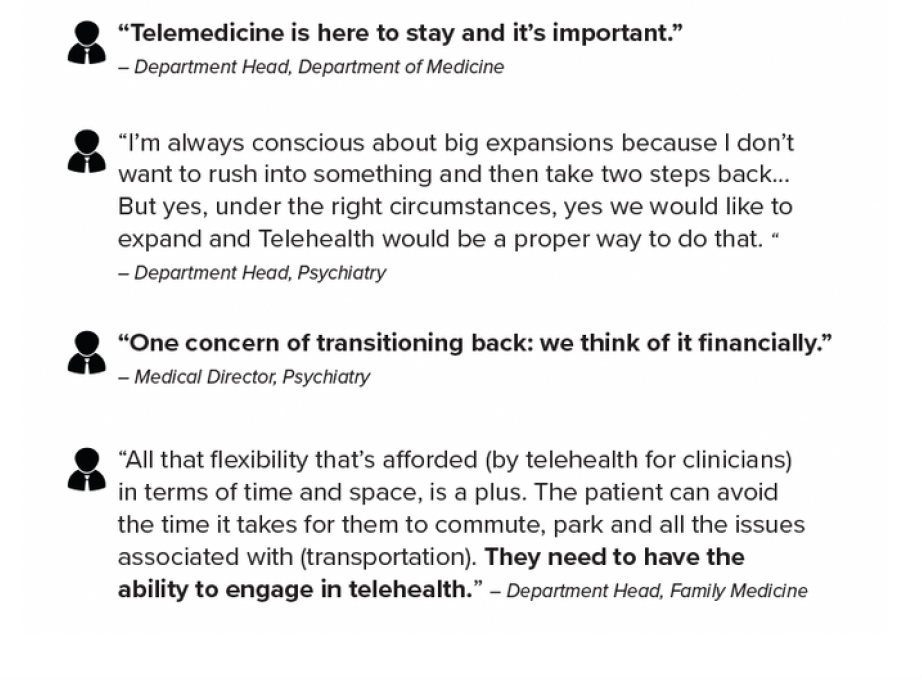
Providers want UIH to recognize the immense value of telehealth and ensure it remains an option in the future.
Eliminated several pain-points
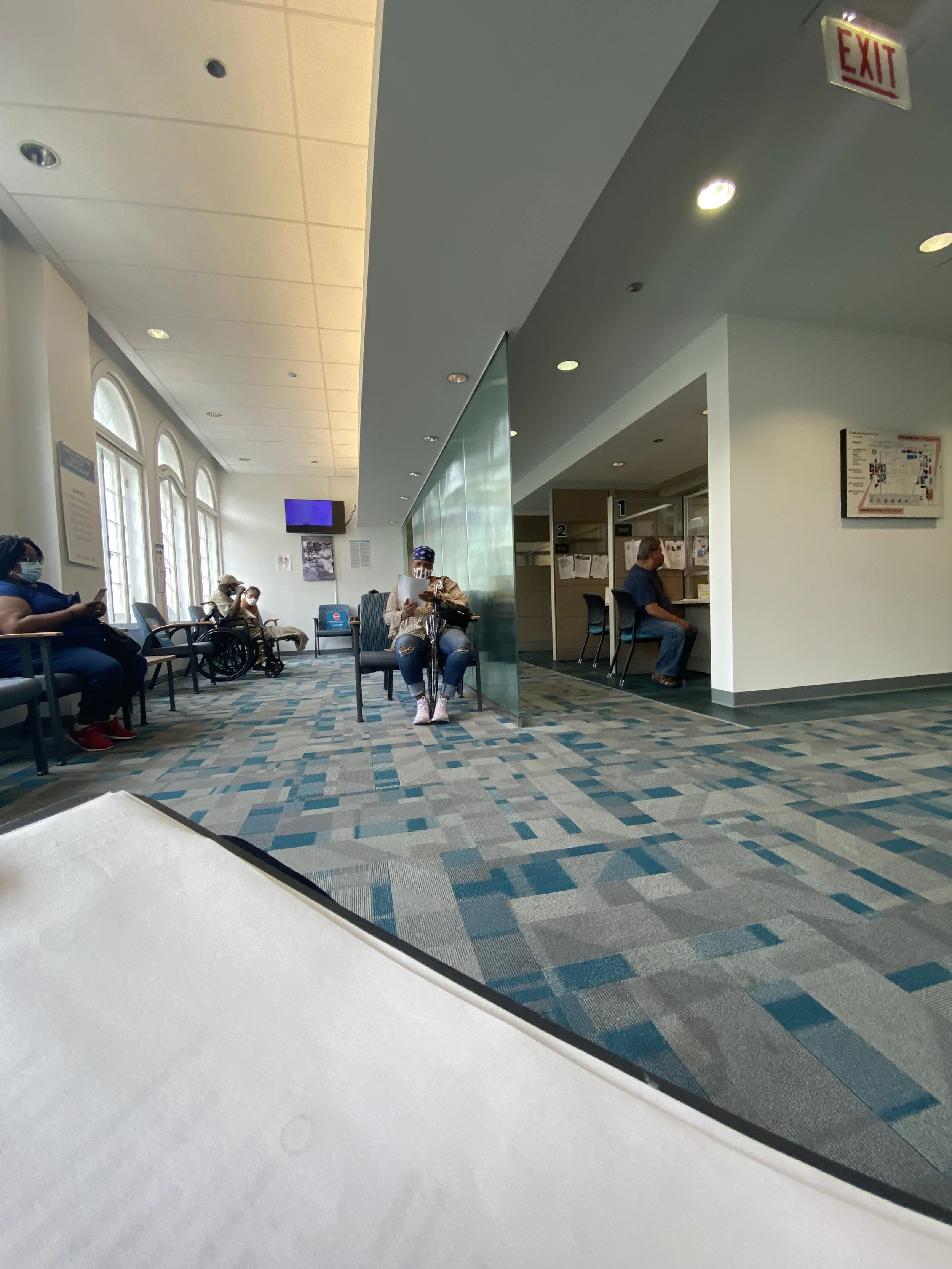
Patients and physicians prefer telehealth for specific appointments, such as check-ins and updates, but UI Health guidelines have not established this. Telehealth removed several pain points on the patient’s journey. For example, scheduling appointments, leaving work, finding childcare, traveling, parking, and staying for a long time in the waiting room.
Executives have viability concerns
It has been hard for UI Health executive teams to understand the value since the insurance policies for reimbursements have constantly changed.
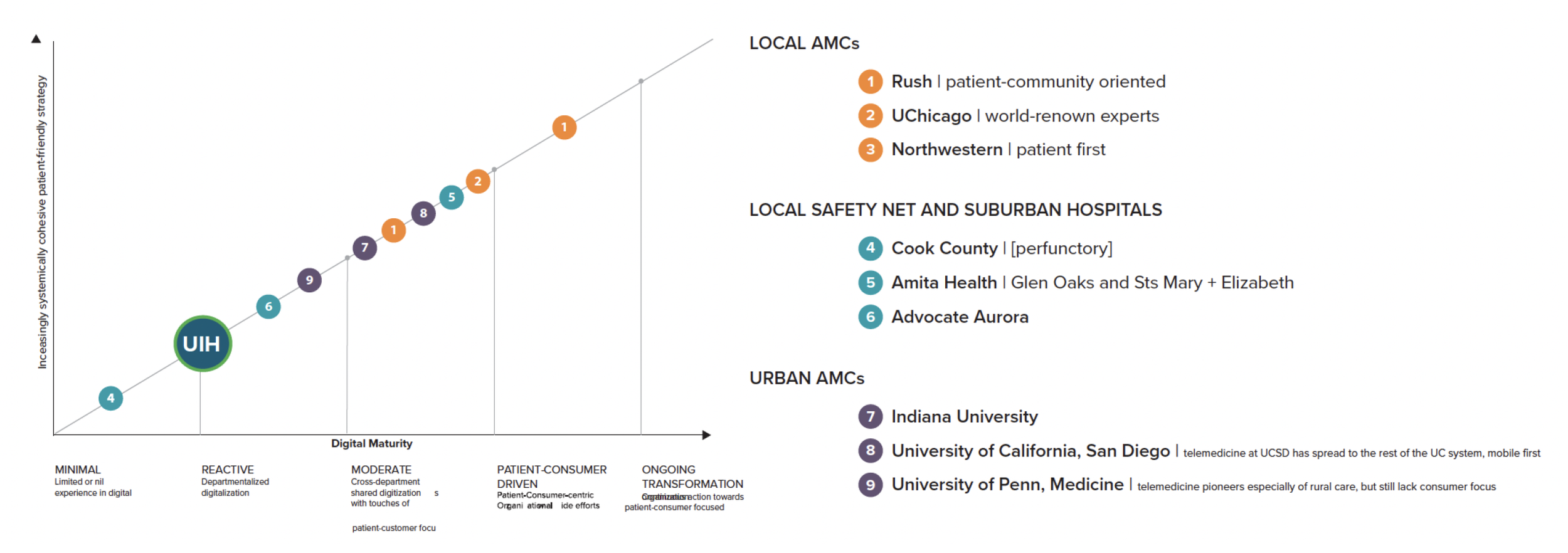
UIH’s approach to telehealth is primarily visit focused, whereas other healthcare systems market broader telehealth offerings. Other healthcare systems are further along in their telehealth maturity and are more strategic and expansive in their application.
Recommendations
Develop a Telehealth Center of Excellence
A new urgent or immediate care model that will serve UI Health patients in a way that better meets their needs and, in addition to new models of care, can support and aid in expanding UI Health’s traditional care and clinic offerings. Telehealth will serve as a central platform that facilitates future activities and enables connections to a diverse group of stakeholders
Reduce Costs
Develop initial programs at low capital cost as the policy landscape settles.
Develop telehealth care programs that are manageable to non-physician providers (i.e., the rest of the medical staff)
Minimize space costs per visit by leveraging the POS 10 model that allows providers to work remotely.
Increase Revenue
Opportunity to reduce no-shows by converting them into Telehealth visits
Provide more telehealth visits per hour POS 10 reimbursements are expected to be higher than the current POS 22 telehealth
Free up POS 22 clinic space to maximize in-person visits and reimbursements
Impact
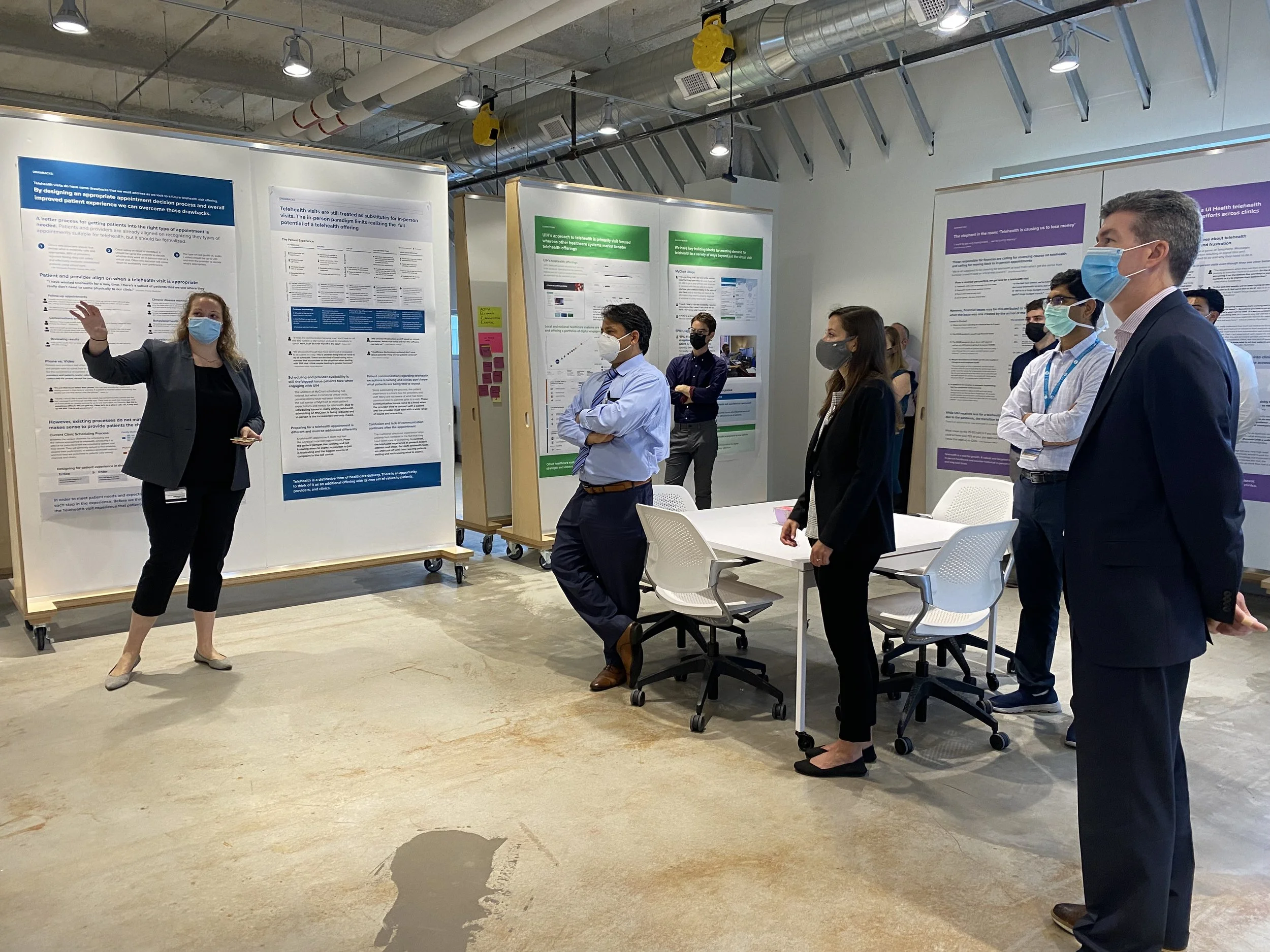
The IHDD team develop the final strategy and is currently defining the development and steps to implement the new Telehealth Center of Excellence program with executive managers.